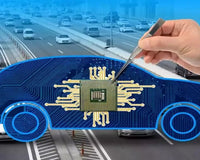
Auto ECU Chip is the most critical component in today’s cars. From regulating engine performance and optimizing fuel efficiency to controlling advanced safety features and enabling seamless connectivity, the ECU IC acts as the brain of the vehicle, processing real-time data from dozens of sensors to orchestrate every critical function, ensuring that today’s cars are safer, more efficient, and more intelligent than ever before.
ECU is a dedicated computer that controls specific vehicle systems, while the ECU IC is the integrated circuit that powers the ECU’s functionality. Today’s vehicles aren’t just equipped with one ECU; a typical modern car can have up to 90 ECUs, each focused on a different system, such as engine, transmission, brakes, steering, infotainment, etc, and all powered by specialized ECU ICs working in harmony.
How do ECU IC manage modern automotive systems?
1. Engine and Powertrain Management: The Foundation of Performance.
The engine is the heart of the car, and the ECU IC is its “brain,” ensuring optimal performance, fuel efficiency, and emissions control. For example, the ECU IC adjusts fuel injection timing and volume based on engine load, speed, and ambient conditions, ensuring the perfect air-fuel mixture for combustion. It also controls ignition timing to maximize power while minimizing fuel waste and emissions. In hybrid and electric vehicles (EVs), ECU ICs manage battery charging, its critical for extending range and battery life. This level of precision wouldn’t be possible without the high-speed processing power of modern ECU ICs, which can make thousands of adjustments per second.
2. Safety Systems: Protecting Drivers and Passengers.
In modern cars, ECU ICs are at the center of life-saving technologies. From anti-lock braking systems to electronic stability control and advanced driver assistance systems, ECU ICs process sensor data in real time to prevent accidents and mitigate risks.
The ECU IC modulates brake pressure hundreds of times per second to keep the wheel rotating, allowing you to maintain control; ECU IC adjusts brake pressure and engine power to stabilize the vehicle; ECU ICs process data from cameras, radar, and LiDAR to adjust speed, maintain distance from other vehicles, and keep the car in its lane that laying the groundwork for semi-autonomous and fully autonomous driving.
3. Comfort and Convenience: Elevating the Driving Experience.
ECU ICs aren’t just about performance and safety—they also enhance comfort and convenience. From climate control to power windows, seat adjustments, and infotainment systems, every electronic feature in your car is managed by an ECU IC.
4. Diagnostics and Maintenance: Simplifying Car Care.
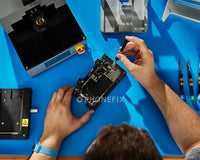
ECU ICs continuously check the performance of various vehicle components, storing error codes when something goes wrong. Mechanics can then use diagnostic tools to read these codes, quickly identifying problems without extensive disassembly.
This diagnostic capability not only saves time and money on repairs but also helps prevent major breakdowns. Some advanced ECU ICs even send real-time alerts to drivers via smartphone apps, notifying them of maintenance needs or potential issues before they become critical. This proactive approach to car care is only possible because ECU ICs are constantly collecting and analyzing data from every corner of the vehicle.
From regulating engine performance to enabling advanced driver assistance systems (ADAS) and even powering in-car infotainment, ECU ICs are the backbone of today’s automobiles that turn a mechanical machine into an intelligent, responsive companion.
As we move toward a future of electric, connected, and autonomous vehicles, Car ECU ICs will only become more important. They’ll continue to evolve, becoming more powerful, efficient, and secure, enabling the next generation of driving innovation.
Automotive ECU IC: How to Manage Today’s Cars