Automobiles have brought great convenience to modern daily travel, leading to an increasing interest in vehicle-related information. While people often focus on components like the engine, transmission, or braking system, there is one part that serves as a vital bridge between the driver and the vehicle: the instrument cluster. The instrument cluster acts as the primary information feedback system for the vehicle. Data such as vehicle speed, engine RPM, coolant temperature, fuel level, battery voltage, oil pressure, total and trip mileage, gear position, and various warning indicators are all consolidated onto a compact panel that the driver can take in at a single glance.
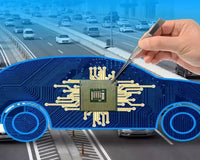
Behind the instrument cluster lies a small network of computers. Various sensors and control modules transmit data via the vehicle’s CAN bus, which is then received and interpreted by a microcontroller (MCU) housed within the cluster. Driver chips subsequently convert these digital signals into physical actions, such as the movement of a needle, the illumination of a warning light, or the rendering of graphics on an LCD/TFT display. In essence, it is the microcontroller and the internal stepper motors that govern the movement of the mechanical gauges and needles.
Why is the instrument cluster so important?
The instrument cluster is more than just a window for information; it serves as an interface for various other vehicle safety systems. Whether it involves a collision warning, engine overheating, a braking system failure, or an issue with the charging system, all such alerts are ultimately conveyed to the driver through this panel. If the instrument cluster provides incorrect readings, freezes, dims, or goes completely dark, the driver may effectively become "functionally blind" unable to access essential information, even if the vehicle’s mechanical components remain in perfect working order. For this reason, any malfunction in the instrument cluster should be treated with the utmost seriousness.
Instrument cluster malfunctions can stem from various sources. Mechanical wear within the gauge needles and their miniature stepper motor gearboxes is a frequent issue. Poor grounding, corrosion, frayed wiring harnesses, or damaged connectors can also trigger intermittent faults. Furthermore, water ingress behind the instrument cluster, voltage instability caused by a faulty alternator, or an aging battery can disrupt the cluster's normal operation. Communication failures on the CAN bus are another common cause; in such cases, the speedometer and tachometer may stop functioning, the LCD screen might flicker or go black, and warning lights may appear dim or fail to illuminate entirely.
But when the fault is traced all the way down, the culprit is very often the cluster's own IC chips, the silicon that turns data into a visible reading. Four sub-systems account for the bulk of electronic cluster failures:
The microcontroller (MCU). This is the cluster's brain. It parses CAN frames, drives the display, manages self-tests and the ignition sweep of the needles, and stores trip data. A failing MCU produces symptoms that look irrational: needles that sweep on their own, gauges that freeze in place, or a cluster that works cold and dies once warm.
The gauge driver IC. Mechanical needles are moved by small stepper motors, and those motors are commanded by dedicated driver chips. When that driver degrades, the needle may stick, jump, read consistently high or low, or refuse to return to zero. It is a very common misdiagnosis: technicians replace the stepper motor itself and find the fault returns, because the driver stage was the real problem.
The EEPROM. The odometer and other permanently stored values live here. Corrupted memory can display nonsense mileage, throw an error message, or prevent the cluster from completing its start-up sequence at all.
Power regulation and supporting ICs. Voltage regulators, CAN transceivers, and backlight/LCD driver ICs are the cluster's plumbing. Unstable vehicle voltage from a weak battery or a failing alternator stresses them, and their failure shows up as dim or flickering illumination, dead display segments, and clusters that reset intermittently.
Underpinning all of this is a physical problem that no software fix can address: solder fatigue. A dashboard lives in one of the harshest thermal environments in the car. It bakes in summer sun, freezes overnight, and cycles through thousands of heat-and-cool expansions over its life. The surface-mount solder joints that attach these ICs to the cluster's printed circuit board expand and contract with that cycling until micro-cracks form. The result is the maddening "works when it's cold, fails when it's warm" pattern the signature of a hairline joint that opens only at a specific temperature. This is why competent cluster repair focuses on reflowing and inspecting the board, not just swapping parts.
The primary consequence of an instrument cluster IC malfunction is a loss of trust in the information it displays. Drivers rely on these readings to make continuous, split-second decisions, such as determining a safe following distance, deciding whether to overtake, choosing when to pull over, or judging when to refuel. When the instrument cluster fails, the data informing these decisions becomes unreliable.
A second consequence is the failure of warning systems, which represent the instrument cluster’s most critical safety function. If a microcontroller or display driver circuit malfunctions, alerts such as those for low oil pressure or brake system issues might be delayed, rendered illegible due to insufficient brightness, or fail to appear entirely. If a driver cannot see a warning light, they are unable to take appropriate action, potentially missing the crucial window to address a safety issue before it escalates.
Furthermore, an erroneous temperature reading could prevent the timely detection of an overheating engine, while an incorrect charging voltage display might mask a failing alternator potentially going unnoticed until the battery is completely depleted and the vehicle breaks down while in motion.
The instrument cluster is easily overlooked, yet it serves as the critical component through which all other vehicle systems communicate information to the driver. Drivers rely on the tachometer to determine when to shift gears, the speedometer to gauge stopping distances, and the fuel gauge to plan their next refueling stop; meanwhile, the illumination of a warning light demands an immediate response. Therefore, just as we monitor a vehicle’s mechanical performance, we must also keep a close eye on the instrument cluster. Any irregularities should be addressed and repaired promptly to ensure that safety-critical issues are not neglected, which could otherwise create ongoing hazards.
DIY Car Dashboard Repair: What You Need to Know About Instrument Clusters