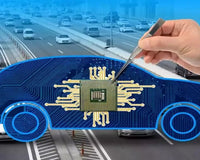
Modern vehicles rely heavily on electronic systems to manage engine performance, fuel efficiency, safety features, and overall driving experience. At the center of these systems is the car ECU IC, a critical component that enables vehicles to operate with precision and reliability. 
An Electronic Control Unit is essentially the brain of a vehicle’s electronic systems. Modern cars may contain dozens of ECUs, each responsible for different functions such as engine management, transmission control, braking systems, and climate control. Within this unit lies the auto ECU IC to process signals from sensors and send commands to various vehicle components.
However, the engine control ECU is often the most complex, relying heavily on a powerful automotive ECU IC to process real-time data. Modern engines require precise control of multiple parameters to achieve optimal performance and fuel efficiency.
The integrated circuit continuously analyzes information from sensors such as the mass airflow sensor, crankshaft position sensor, and oxygen sensor. Using this data, the automotive ECU IC determines the correct air-fuel ratio needed for combustion.
The ECU also manages ignition timing. If the spark occurs too early or too late, the engine may lose efficiency or experience knocking. By adjusting ignition timing dynamically, the automotive ECU IC ensures smooth engine operation.
Fuel injection is another critical function controlled by the integrated circuit. Instead of using mechanical carburetors like older vehicles, modern cars rely on electronically controlled fuel injectors. The automotive ECU IC precisely determines when and how much fuel should be injected into each cylinder.
Key Functions Governed by ECU IC Circuits.
1. Powertrain Management.
The Engine Control Unit (ECU) is the most critical, managing fuel injection, ignition timing, idle speed, and emissions. It uses sensor data to balance power, efficiency, and compliance with strict environmental standards.
The Transmission Control Unit (TCU) works with the ECU to ensure smooth gear shifts, optimizing power delivery for performance or economy.
2. Safety Systems.
ECUs are the backbone of automotive safety. Cameras, radar, and LiDAR feed data to ECUs that enable automatic emergency braking (AEB), lane-keeping assist, and adaptive cruise control. Airbag ECUs deploy airbags based on impact severity and occupant position.
3. Comfort & Convenience.
Body Control Modules (BCMs) manage lighting, climate control, power windows, and infotainment, enhancing driver and passenger experience.
4. Electric Vehicle (EV) Management.
In EVs, ECUs control battery charging, motor torque, and energy regeneration, maximizing range and performance via high-voltage power ICs.
As vehicles continue to evolve, the role of the automotive ECU IC is becoming even more important. From controlling engine timing to managing emissions and fuel injection, From the hum of the engine to the deployment of airbags, every critical function relies on the seamless collaboration of these tiny, powerful chips. these tiny chips play a massive role in ensuring vehicles run efficiently and safely.
How Automotive ECU IC Govern Modern Vehicles