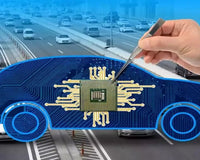
If your OBD-II Scanner can’t talk to the car and throws U0100, it’s telling you the vehicle’s network lost contact with the engine computer. Automotive Electronic Control Unit (ECU), also called the Engine Control Module (ECM), is the brain of a car's electrical system. When it goes silent, diagnosing issues becomes nearly impossible. But fear not, ECU communication problems are rarely terminal, and with a methodical approach, you can pinpoint the root cause.
ECU monitors and regulates every critical engine function from fuel injection and ignition timing to emissions control. Currently, almost all vehicles are equipped with an OBD2 system, which uses a standardized port to connect the ECU to diagnostic tools. When this link breaks, you lose access to diagnostic trouble codes, real-time sensor data, and the ability to reset warning lights.
Common symptoms of ECU communication failure include: an unresponsive OBD2 scanner, “N/A” codes on diagnostic tools, intermittent engine stalling, a check engine light that stays on after reset, or even a vehicle that won’t start. Importantly, these issues often stem from electrical problems, its not a faulty ECU itself.
You can perform the troubleshooting yourself before going to a professional repair shop, many communication issues are caused by trivial problems.
Step 1: First Rule Out the Simplest Culprits.
1. Verify the Scanner Is Working: The problem might be your tool, not the car.
2. Check the OBD2 Port: Inspect the connector for bent pins, rust, or dirt. Ensure the scanner is plugged in firmly, a loose connection is a common culprit.
3. Inspect the Car Battery: A dead battery can disrupt ECU power and communication. Use a multimeter to check battery voltage; if low, charge it before proceeding.
4. Check Relevant Fuses: A blown fuse will cut power to the ECU or OBD2 system. Replace any blown fuses with the correct amperage rating.
Step 2: Test ECU Power and Ground Connections.
Test ECU Power Supply, you should read 12V, if not, there’s a break in the power circuit. Check ground connections, use the multimeter to test for voltage drop, it should be less than 0.1V. A high voltage drop indicates a poor ground.
Step 3: Examine Wiring Harnesses for Damage.
The wires connecting the OBD2 port to the ECU are part of the vehicle’s wiring harness, which can degrade over time due to heat, vibration, or water damage. look for backed-out/bent/corroded pins. Trace CAN harness runs for chafe or oil-soaked insulation.
Step 4: When to Suspect a Faulty ECU.
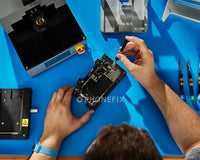
If you’ve ruled out the scanner, port, fuses, power, ground, and wiring, the ECU itself may be faulty. Signs of a bad ECU include physical damage, internal component failure, or checksum/memory errors on diagnostic tools. That’s the point to consider a professional repair. Many specialized ECU repair services offer bench testing to verify if the ECU is functional. This saves you from replacing a working unit. 
ECU no communication is a frustrating roadblock, but it’s rarely a death sentence for your vehicle or your wallet. By starting with simple checks and moving to more complex tests, If you’re stuck, don’t hesitate to consult a professional technician, especially for bench testing or ECU coding. With the right approach, you’ll have your car’s brain talking again in no time.
How to Diagnose Car ECU/ECM No Communication?