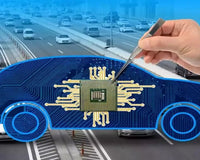
In the era of automotive electrification, intelligent driving, and connected mobility, the Electronic Control Unit (ECU) stands as the brain of every vehicle. At the core of this critical component, ECU IC chips determine a vehicle’s safety, efficiency, stability, and intelligent performance. One of the most trusted and widely used technologies in this space is the Bosch ECU IC. 
What makes Bosch’s IC solutions irreplaceable in modern automotive systems?
One of the most important tasks performed by auto ECU chips is managing engine performance. Modern engines rely on precise calculations to determine the ideal air-to-fuel ratio, ignition timing, and injection pressure. Even a small miscalculation can affect fuel efficiency, emissions, or engine power.
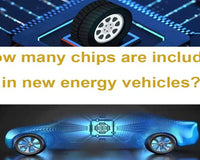
As the automotive industry shifts from fuel vehicles to new energy and intelligent vehicles, traditional ECU chips can no longer meet the demands of high-efficiency energy conversion and high-precision intelligent control. Bosch keeps pace with industry trends through continuous technological iteration, leading the upgrade of automotive semiconductor technology. From traditional engine powertrain control to new energy electric drive and intelligent cockpit systems, Bosch’s full-scenario IC portfolio covers all modern automotive application needs.
Car ECU chips differ drastically from consumer electronics chips, they require zero tolerance for errors, as any failure may lead to driving risks. Bosch has always anchored its product development in automotive-grade safety standards, strictly complying with the ISO 26262 functional safety standard and reaching the highest ASIL-D safety level for core ECU ICs. This industry-leading safety capability is the primary reason why global automakers trust Bosch ECU ICs for core vehicle control modules.
Vehicles operate in extremely harsh and variable environments: extreme high and low temperatures, vibration, humidity, and voltage fluctuations all test the stability of ECU chips. Whether it is the high-temperature heat generation of engine compartments or the low-temperature cold start in alpine regions, Bosch chips can maintain consistent and accurate operating performance . This long-term reliable performance ensures that vehicles remain stable throughout their service life, greatly reducing maintenance failures and safety hazards for automakers and users.
Modern automotive electronic control is no longer a simple hardware operation but relies on the deep integration of hardware chips and underlying software algorithms. Bosch’s self-developed underlying software and algorithm systems are perfectly matched with its ECU IC hardware architecture, and its software system supports cross-platform adaptation, realizing the decoupling of hardware and software, which facilitates automakers’ subsequent function upgrading and iterative optimization . This seamless hardware-software synergy avoids compatibility problems common in third-party chip solutions, greatly improving the overall operating efficiency and intelligent expansion capability of vehicle ECU systems.
In the wave of automotive electrification and intelligence, vehicle electronic control systems are becoming more complex and precise, and the requirements for core chips are constantly upgrading.Bosch ECU IC technology excels in this area by delivering extremely accurate processing capabilities. The chips quickly analyze sensor data and adjust engine parameters in milliseconds. This rapid response ensures optimal combustion, better fuel economy, and smoother engine operation.
Why Bosch ECU IC Chips Are the Top Choice in Modern Automotive Systems